Updated November 14, 2026
There are hundreds of productivity methods, and most of them are variations on a few good ideas: get tasks out of your head, decide what matters, protect time for it, and review regularly. The trouble is choosing, then sticking with it long enough to work.
This guide maps out the main productivity systems, what problem each one solves, and how to combine a few of them into a simple setup that fits your job. Each section links to a detailed guide.
Key takeaways
- Productivity systems do five jobs: capture, prioritise, schedule, focus and review.
- Combine a few methods instead of chasing one perfect system.
- A weekly review keeps any system working.
- Try one combination for a month before changing anything.
Why you need a system at all
Work today is fragmented. Attention researcher Gloria Mark found the average time people stay on one screen fell to about 47 seconds in studies from 2016 to 2020. Microsoft’s 2025 data on heavily contacted Microsoft 365 users found pings roughly every two minutes during core hours. Without a system, the day is run by whatever arrives next. A system decides for you in advance.
The five jobs of a productivity system
| Job | Question it answers | Methods that help |
|---|---|---|
| Capture | Where do tasks and ideas go? | Getting Things Done, bullet journal, to-do apps |
| Prioritise | What matters most? | Eisenhower matrix, personal OKRs, eat the frog |
| Schedule | When will I do it? | Time blocking, morning routine |
| Focus | How do I actually do it? | Deep work, Pomodoro, fewer phone distractions |
| Review | Is this still working? | Weekly review, personal kanban |
Capture: get it out of your head
Getting Things Done is the classic capture system: everything goes into trusted inboxes and becomes a clear next action. The two-minute rule clears tiny tasks immediately. If you prefer paper, the bullet journal does the same in a notebook. For files and notes, the PARA method keeps everything organised by project.
Prioritise: decide what matters
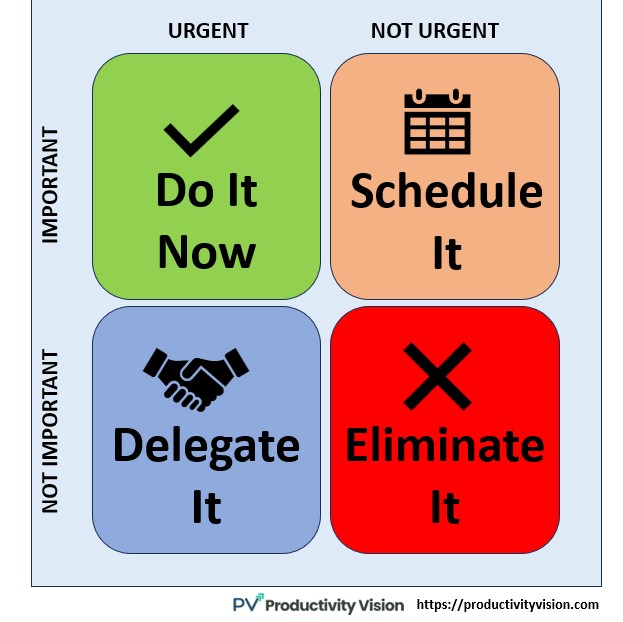
The Eisenhower matrix separates important from merely urgent. Personal OKRs connect daily work to bigger goals each quarter. Eat the frog makes sure your most important task gets done first.
Schedule: give priorities a time
Time blocking turns priorities into calendar appointments. A productive morning routine starts the day on purpose, and habit stacking makes small routines stick.
Focus: do the work
Deep work protects long blocks for hard tasks. The Pomodoro technique makes starting easier. Our guides on how to focus at work and phone distractions at work cover practical fixes for a noisy workplace.
Review: keep the system alive
A 30-minute weekly review is the habit that keeps every other method working. If you think visually, personal kanban shows your whole workload at a glance and limits how much you juggle at once.
Tools
Any tool works if you use it daily. Compare options in our guide to to-do list apps, or build a linked setup with our Notion productivity system. AI can now help with planning and reviews; see AI task management, AI time management and our guide to using AI at work.
Three starter setups
| If you are… | Try this combination |
|---|---|
| Overwhelmed by tasks | GTD capture + weekly review + Eisenhower matrix |
| Busy but not making progress | Personal OKRs + time blocking + deep work |
| Struggling to start | Eat the frog + Pomodoro + habit stacking |
Start with one combination for a month before adding anything else. Switching systems every few weeks is the most common reason none of them work.
Don’t forget energy
No productivity system can make an impossible workload possible. If you’re exhausted rather than disorganised, read how to avoid burnout and how to stop procrastinating. Rest and sleep are part of the system, not breaks from it.
Quick FAQ
What is the best productivity system?
There isn’t one best system. Most people do well with a simple combination: a capture method, a way to prioritise, time on the calendar for important work and a weekly review.
How long does it take for a productivity system to work?
Give any system at least four weeks. New habits take time; research on habit formation found an average of 66 days to feel automatic.
Do I need an app for productivity systems?
No. Paper works for many people. Apps help with reminders, recurring tasks and access across devices.